Wednesday, August 10, 2011

Sheldon Bolstad's Blockhead Popper

Photo Courtesy of The Smallmouth Angler
I know, I know...I just had a blog post saying No to Foam, but if you are going to use foam use this pattern.  Hugh Langevin is the creator of this pattern and you'll be hard pressed to find a popper that works as good as these do.  Let's talk about some of the benefits shall we?
  • It's lightweight.  This sucker is so light you can cast it down to a 5wt.  Sometimes you just don't feel like lugging an 8wt around all day.  The Blockhead gives you options on the water and I like options.
  • The Blockhead Popper has great popping ability!  You can cast the Blockhead and have it sit quietly or you can cast it and raise a major ruckus.  I have never seen a popper with such popping action.  When you look at it it just doesn't seem special, but looks are deceiving - this popper can create a wake!
  • They are really durable - even for foam.  The foam used to form the heads is some super tough stuff.  Many guys hack the heads out with a band saw and others use a razor blade, either way you can't cut this stuff without exerting a little elbow grease.
  • The Popper is time tested.  Hugh Langevin, Sheldon Bolstad, Tim Holschlag and Dan Johnson have put this fly to the test and it has produced time and time again.
  • The pattern is actually pretty simple after you shape the head.  Once the head is in place you just have to tie on some marabou or squirrel tail.   Don't make the tail section too complicated because the magic is in the head with its flat face and super splashing tendencies.
  • It's a pretty inexpensive fly to put up.  The block of foam yields piles of poppers and you can't get cheaper than marabou or squirrel tails.  I get the blocks of foam for $3 and the hooks I use are the Mustad 33903 Kink Shank Hook or the Mustad 3366 and they work perfect.  Both of these hooks are available for a great deal at Captain Hooks.  It doesn't have to be complicated or expensive to be a producer.
I have some scans of notes taken at a fly tying event conducted in 1996.  Print the directions and give this pattern a whirl.  Your local fly shop will have the block foam and try not to get too frustrated cutting the stuff...it is frustrating for everybody.  Besides, if you don't want to make them you can buy them from The Smallmouth Angler.

Blockhead Page 1

Blockhead Page 2

Block Head Page 3

Blockhead Page 4

Blockhead Page 5

Sunday, August 7, 2011

Fly Box Hero - Tim Holschlag

Tim Holschlag with a South African Smallmouth
If you are serious about river smallmouth fishing I'm sure you have heard of Tim Holschlag.  Tim is a true authority when it comes to smallmouth bass and how to catch them.  Three years ago I read Tim's second book Fly Fishing For Smallmouth Bass and it changed my attitude about fly fishing forever!

When I was a boy I spent my spring breaks with my Uncle Joe and Aunt Doris in Terre Haute, Indiana.  As I've written many times in past posts my Uncle Joe was and always will be my hero.  The best times I had with my uncle was wading for smallmouth in the Sugar Creek near Turkey Run State Park.  For some reason over the years I deviated from the type of fishing I truly enjoyed - wading!

The Smallmouth Angler Stream Smallmouth Class
I attended Tim Holschlag's Stream Side School in the summer of 2009.  During the class we waded with Tim on the Root River in Southern Minnesota.  Wading brought back many memories and I forgot how much I loved the experience.  The techniques I learned that day are with me (and my boys) every time I fish the river (usually on foot).

Tim is a real professional, but the best thing about him is he is down to earth.  From his flies, fly rod, boat and hip wagers Tim is very practical - demanding durability but balancing price.  I applaud Tim for being so down to earth even though he is one of the world's authorities of smallmouth bass.  You would expect him to look like one of those Nascar fisherman, but Tim is not like that.

Tim's three books are fantastic and even if you fish for smallies a few times a year you should really own all of his books.  I am adding 2 detailed posts about Tim's books this week, so check back if you need more information.  You can always visit Tim's website The Smallmouth Angler too!

The Holschlag Hackle Fly (HHF)
Tim is the creator of the Holschlag Hackle Fly (HHF) pictured to the right.  This fly is deadly if you use it under a strike indicator.  Tim calls the technique "The Crayfish Hop."  This fly is a prime example of Tim's practical nature.  Made with common materials found in every fly tyers cache of fur and feathers this fly is field tested, super fishy and very durable.

I can write for pages and pages about Tim Holschlag's professionalism, books, accomplishments, guiding abilities, knowledge, skill, passion and creativity, but all you need to know about Tim is he is a great teacher.  Since meeting Tim I have become a better fly tyer and a way better fisherman - what else can I ask for from a Fly Box Hero?

Before I close out this post I'd like to thank Tim's wife Lyn.  Last week I ordered Tim's new book, River Smallmouth Fishing.  I needed the book fast, so contacted Lyn to see if she would ship the book out right away.  The personalized book came in 1 day, just in time for my trip to New York.  Both Tim and Lyn do a fantastic job with The Smallmouth Angler.  When I called Lyn she immediately recognized my name from a class 2 years ago!  I had a great experience with The Smallmouth Angler, so please support them however you can.

Tom Holschalg with a Good Friend!


Saturday, August 6, 2011

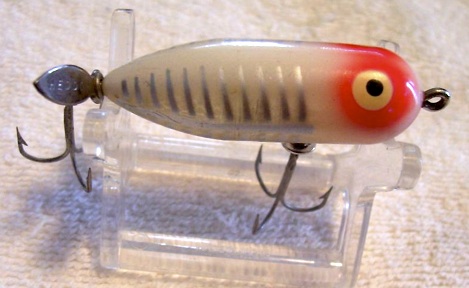
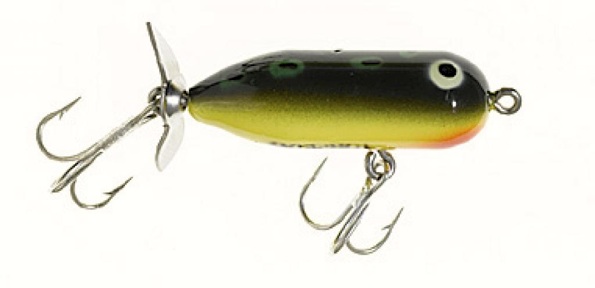
Heddon Tiny Torpedo


The Heddon Tiny Torpedo?  Many of you may think the Torpedo is an old relic.  After all look at it - the paint job is not very realistic and the propeller?  Does it really work?  


If you are reaching past the Tiny Torpedo to grab something else more realistic looking and expensive -you should stop and tie on this lure.  The Torpedo is an absolute awesome river lure and I think smallmouth actually hate it.  They hate it so much they can't resist it!

I first used the Tiny Torpedo on the Sugar Creek in Indiana.  Spending mosy of my spring breaks with my Uncle Joe, we flung Tiny Torpedos for hours and hours.  This lure, or "plug" to my Uncle Joe was our "go to" lure when we spin fished for smallies.  (When we fly fished the Cockatoush was our baby - more on the Cockatoush in future blog posts.)

Last week my son caught the largest river smallmouth I have ever seen on a chrome Torpedo.  The funny this is I had almost a dozen TT's in my tackle box!  My good friend Dick Gross sent the boys a few chrome Torpedo's for their birthday, so I thought "What the heck, for old times sake I'll give them a try!"  I'm not sure where the other TT's came from, maybe the fish Gods beamed them to my tackle box?  For years I ignored this lure because I thought it was an antique, I couldn't have been more wrong.  It is easy to cast and see in the water and the propeller really creates a ruckus that drives fish mad.

Here are some ringing endorsements for the Tiny Torpedo:

"Here's my favorite surface plug for smallmouth bass in the spring, when the fish are shallow and surface-aware. A 1/8-ounce Teeny Torpedo in a bullfrog pattern fishes well on light spinning gear with 6- or 8-pound-test, which perfectly matches tackle to quarry. The single-propeller tail makes just enough fuss when twitched to get the fish's attention. Big smallies often take this lure with a gentle sip." The 50 Greatest Lures of All Time - Field and Stream Magazine


Tim Holschlag writes: "The Tiny Torpedo is an old time lure that I think gets overlooked.  It's a good search bait, but you can also keep it near structure longer and work it slow.  I think it has a different acoustical signal the fish aren't used to.  You can also change the sound by bending the prop blades toward or slightly away from the hook.  I don't think color means much for topwater lures.  I like the natural perch pattern because I can see it well in the water."  Secrets of the Trophy Hunters - Field and Stream Magazine March 2011

Friday, July 29, 2011

Happy Birthday......Where's the Camera!!!!


I took the family out fishing on the Mississippi today, a fish story unfolded right before my eyes and I didn't have a camera!  Here's the story....

Monday is my youngest son's birthday (his 8th), so we decided to take an early fishing trip.  Headed to Monticello, MN to fish the Mississippi River.  We heard the river could be high, but we decided to go anyway.  We packed some snacks and drinks, worst case we would watch the boys play on the playground and maybe look for crayfish.

We ordered a pizza and took it to a picnic shelter.  I rigged one fly rod and 3 spinning rods with a bunch of top water stuff.  I pulled a shiny Tiny Torpedo from the box and tied it on my youngest son's setup.  The Tiny Torpedo came from Fly Box Hero, Dick Gross.  A floating lure would surely not get snagged, giving ME more time to fly fish.

In route to the water I stopped at my car, looked at the water and tossed the camera and phone on the seat figuring "The water is high....we aren't going to catch a thing..."  That was the biggest mistake I have made in years.

We fished for about 15 minutes and God was the river high!   Thoughts of packing up shop just entered my mind when I heard a small voice yell "I think I got something!"  I turned to see a massive fish jump out of the corner of my eye.  I thought "Oh....Elliot caught a pike..." and I started walking over to my son (about 150 yards).  My wife was fishing with him and yelled "It's a huge smallmouth!"  I looked again and saw the fish clear the water for a second and third time.  It all happened so fast!

I ran over, set down my rod and saw my son step in my water and lip the smallmouth and it WAS BIG!  I reached in my pocket for a camera.....phone....anything....Nothing was there!  I felt for a tape measure and had it in my top vest pocket.  Pulled it out to get a number on the fish....22" even!  What a fish!  I removed the treble hooks and Elliot put her back in the river before she got too tired.  Like a little pro he rocked her back and forth in the water and Bam! she was off to her favorite hiding spot, alive and healthy.

I have hauled my camera around for every single trip and the one time I left it in the car a trophy was landed.  The whole family was there, but I would kill for the picture.  Elliot was so proud - As were we!

Well Elliot....Happy Early Birthday!  Hopefully we'll catch a bigger one next year and I'll have the stinkin' camera to capture the moment!

Flat Stanley


Recipe
Hook: 2XL to 3XL. Daiichi 1260 (Size 6) Shown
Thread: 6/0 Brown Uni
Tail:  Brown Marabou
Thorax: Brown Marabou, Turkey Feather, Pine Squirrel Dub, Copper Wire
Legs: Brown Sili-Legs

This pattern is absolutely deadly because it resembles so many things!  Is it a crayfish, a leech or maybe a hellgrammite....maybe a little of each!  The profile of the fly is the biggest challenge.  If you notice it is actually flat?  The materials used for Stanley are common, but how they are layered is where the magic begins.

The tail is your basic marabou offering, but it is short to stop those short strikes.  The body consists of a few wraps of lead (not too much) covered with a layer of turkey feather.  Marabou covers the turkey along with some blended pine squirrel dub/ice dub.  This is not a simple fly to put up by any means.  I'll work on a video on this one.

The small size and structure of this fly and the fact it is not heavily weighted gives it a very lifelike look in the water.  Cast it above a pool and let him drift under an indicator.  Once the indicator stops, set the hook!  This is a fun one to fish and it is very effective.

Make sure to have a hook hone in your vest to keep the hook nice and sharp.  Under an indicator this fly will tick off roks and debris dulling the hook.  Remember, keep em sharp!

The smallmouth below was caught on this fly under an indicator.  My buddy Peter is the best fisherman I know, he landed this Mississippi smallie on Flat Stanley in 2010.

18" Smallie Caught on Flat Stanley

Saturday, July 23, 2011

Hopper Popper


Recipe
Hook:  Mustad 3366 Size 2
Thread: Black Flat Waxed Nylon
Tail/Body/Head:  El Cheapo Sheet Foam
Legs:  Black Palmer Chenille
Legs:  Grasshopper Barred Sili-Legs

This is the Smallmouth Fly Box rendition of Kent Edmunds Tokyo Spider and Stealth Bomber.  Tied on a size 2 hook this pattern is built for the big boys.  It is very inexpensive to tie, floats all day and is extremely easy to cast even with a 6wt outfit.  I was out last weekend with a 6wt Ross FlyStik and had no problem casting this thing a mile (this is a big bug!). 

I like using large poppers for smallies, but sometimes they can hit the water too hard.  The Hopper Popper hits the water like a dragonfly or a maybe even a grasshopper that was blown in the wind.  I've had everything from big bluegills to northern pike hit this thing like a freight train.

Another beef I have with many top water patterns is the hook gap is too crowded.  Many fisherman resort to bending the hook out to increase hook-ups.  The practice of bending the hook may be necessary on bulky patterns, but there are no worries here.  The bulk of the materials on the Hopper Popper sit on top of the hook shank leaving the hook gap intact.

My blog entry Cork Poppers - Say No to Foam questions the durability of foam poppers and preaches the virtues of cork. Let's face it sometimes foam doesn't hold up well.  However, some simple steps can be taken to increase durability.  For example, I reinforce all thread windings and foam folds with Zap-a-Gap.  Sometimes thread windings nick the foam and a tear will begin to form ruining the fly after a few fish.  Zap-a-Gap creates a rip-stop bond that stops the initial micro-tear giving the fly a much longer lifespan.  The Hopper Popper can survive hard hits from dozens of fish and weeks of river fishing.

Once again we opted for the timeless (and inexpensive) Mustad 3366.  I have deviated from the 3366 to super expensive Tiemco and Gammy hooks, but always return to economical Mustad.  I have heard many people question the quality of Mustad hooks, specifically when it comes to sharpness.  This is when I usually ask if people sharpen their hooks on the river while they are fishing.  Most people I run into do not own a hook hone?  One snag and your fancy uber sharp $1 hook is dull as a Walmart bargain basement hook.  Use the 3366 and carry a hook hone.... 

This is a very versatile and buggy warm water pattern.  Inexpensive to tie, easy to see and cast, floats all day long and is appealing to just about every fish that swims.   Give it a try and I'm certain you'll be hooked.

Wednesday, July 20, 2011

Mike Jacob's Bronze Goddess

Photo Courtesy of Ward Bean (www.warmwaterflytyer.com)
This is a very buggy looking pattern created by Iowa fly tyer Mike Jacobs.  I will be posting my version of this fly soon.  I like the blend of materials....Mike did a great job.

Here is a link to Mike Jacob's online store the Hawkeye Fly Tyer.